Guide · Generator sizingWhat size generator do you actually need?
It comes down to what you want running, not square footage. Get a quick estimate in seven taps, or add up your appliances one by one with the wattage calculator.
The short answer
Typical sizes, by what you want running.
A starting point only. Central air, electric appliances and a well pump move you up the list.
- 10–14 kWEssential circuits in most homes
- 16–18 kWMost of the house without heavy simultaneous loads
- 20–22 kWThe most common whole-house size
- 24–26 kWLarger homes and central air
Tool 1 · Quick sizing calculator
Estimate your size in seven taps.
Answer a few questions about your home. Want the price too? The cost calculator adds it.
Tool 2 · Wattage calculator
Add up your appliances, one by one.
Check what you want running during an outage and set how many. The meter totals the running load, adds the biggest start-up surge and suggests a standby size.
How sizing works
Running watts, starting watts and headroom.
- 01
Running watts
What each appliance draws while it’s running. Add up everything you want on at the same time.
- 02
Starting watts
Motors (AC, pumps, fridges) need a brief surge to start, often two to three times their running load.
- 03
Headroom
A generator shouldn’t run flat out. Sizing so the normal load sits around 80% leaves room for surges.
Reference
Appliance wattage chart.
Typical running and starting watts for common household appliances. Yours may differ; the nameplate on the appliance has the real number.
| Appliance | Running watts | Starting watts |
|---|---|---|
| Refrigerator / freezer | 700 | 2,200 |
| Chest freezer | 500 | 1,500 |
| Microwave | 1,000 | — |
| Electric range & oven | 5,000 | — |
| Dishwasher | 1,500 | — |
| Coffee maker | 1,000 | — |
| Appliance | Running watts | Starting watts |
|---|---|---|
| Furnace blower (gas or oil) | 800 | 2,350 |
| Central air, 3 ton | 3,500 | 7,000 |
| Heat pump, 3 ton | 3,500 | 7,000 |
| Window air conditioner | 1,200 | 3,600 |
| Space heater | 1,500 | — |
| Appliance | Running watts | Starting watts |
|---|---|---|
| Sump pump, 1/2 hp | 1,050 | 2,150 |
| Well pump, 1/2 hp | 1,000 | 2,100 |
| Electric water heater | 4,500 | — |
| Appliance | Running watts | Starting watts |
|---|---|---|
| Lights (LED, a floor) | 300 | — |
| TV, internet & phone chargers | 300 | — |
| Computer / home office | 250 | — |
| Washing machine | 1,150 | 2,250 |
| Electric dryer | 5,400 | 6,750 |
| Medical equipment (e.g. CPAP) | 100 | — |
| Appliance | Running watts | Starting watts |
|---|---|---|
| Garage door opener | 875 | 2,350 |
| EV charger (Level 2) | 7,200 | — |
| Hot tub | 6,000 | — |
Get it right
Calculators get you close. A load review gets it right.
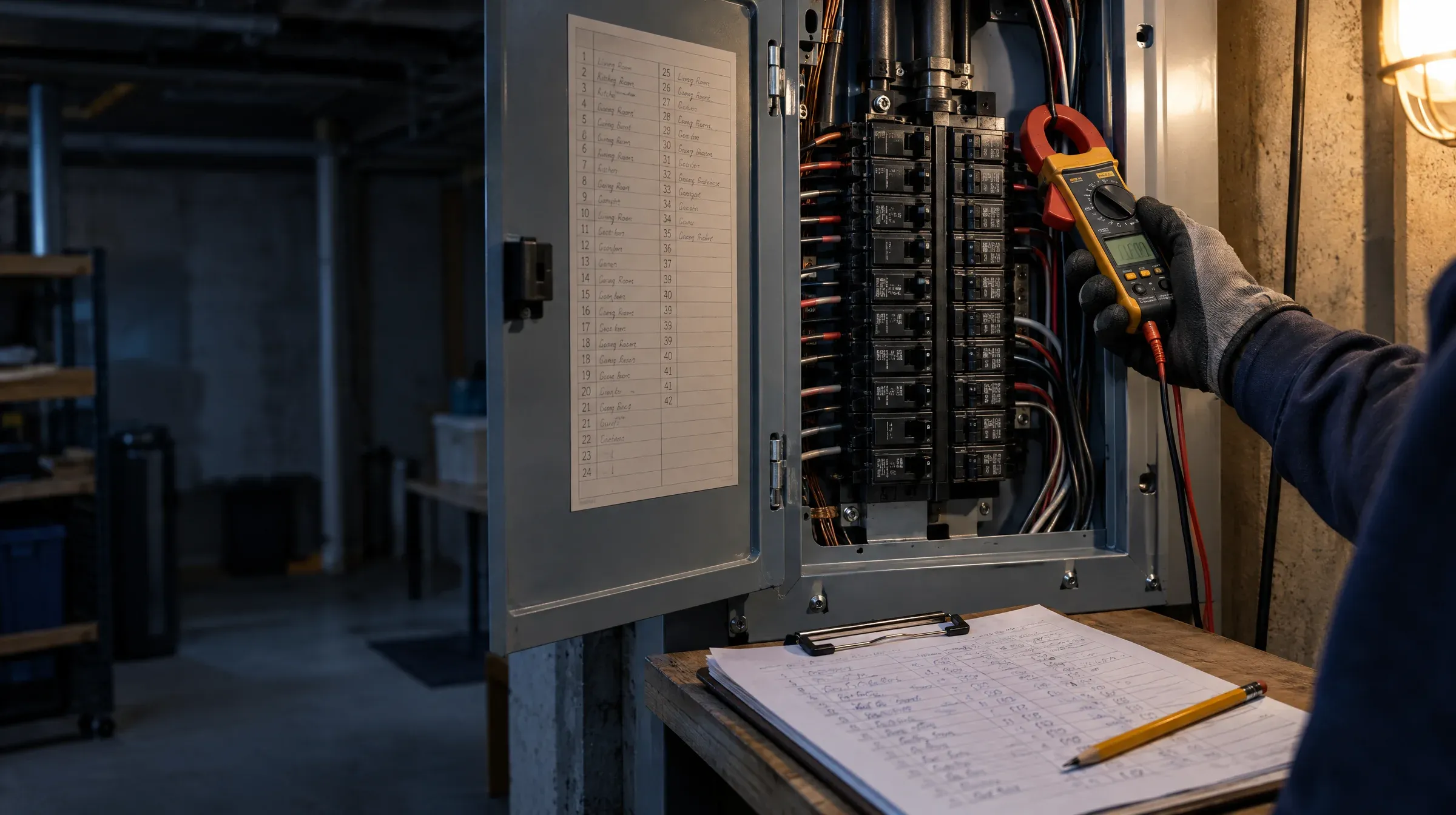
Before any install, Jamie does a load review in person. He:
- Reads your panel and the nameplates on your big appliances
- Checks what actually runs at the same time in your house
- Considers load management, so a smaller unit can handle big loads
- Matches the transfer switch to your electrical service
Sizing questions
Generator sizing, answered.
Still have a question?
Jamie answers every call and request within one business day.
What size generator do I need to run my whole house?
Many whole-house systems fall in the 20 to 26 kW range, but it depends on central air, electric appliances and what runs at once. Use the calculators above for a rough idea, then have Jamie confirm it with a load review.
What size generator do I need for essentials only?
Essentials like heat, the refrigerator, sump and well pumps and some lights often fit a 10 to 14 kW generator, depending on the pumps and furnace in your home.
Can I size a generator by square footage?
Only roughly. Two homes the same size can need very different generators depending on central air, electric heat, a well pump and electric appliances. What you want running matters more than square feet.
What is the difference between running and starting watts?
Running watts are what an appliance uses while it runs. Starting watts are the brief surge a motor needs to start. A generator has to cover both, which is why the largest starting surge is added to your running total.
What happens if my generator is too small?
An undersized generator can overload and shut down when big appliances start, and it works harder than it should. Load management can help a smaller unit, but sizing it right from the start is best.
Size it right the first time.
Send Jamie your list from the calculator and he’ll confirm the size with a load review. Replies within one business day, or call (717) 668-9144.